Mattress Buying Guide
Inside Aireloom Mattresses: Comfort Layers, Support, and Fit
A plush first impression can be appealing, but a mattress has a bigger job than feeling inviting in a showroom. When comparing Aireloom mattresses, look past the surface and consider how each model’s comfort layers, support system, dimensions, and feel work together—and whether that combination suits the way you sleep.
A new mattress is a personal choice wrapped in a practical one. You want a bed that feels comfortable, supports your body, fits your bedroom, and can actually make it through the front door. That last point is especially familiar to Manhattan residents, where narrow stairwells, compact rooms, elevator rules, and tight delivery windows can make an otherwise straightforward purchase feel like a small production.
Aireloom mattresses are often associated with layered construction and a luxurious, cushioned feel. But a brand name, a handsome showroom display, or a broad label such as “plush” cannot tell you everything about a particular mattress. Model specifications matter. Comfort layers can differ; support systems can vary; and two beds from the same maker may feel surprisingly distinct.
The most useful approach is to treat mattress shopping as a fit question. Which materials and construction details matter to you? How do you sleep? Do you share the bed? What foundation will support it? And will the mattress suit your home as well as your body? These questions make it easier to compare Aireloom models thoughtfully rather than choosing by appearance or a single firmness word.
What “comfort layers” actually do
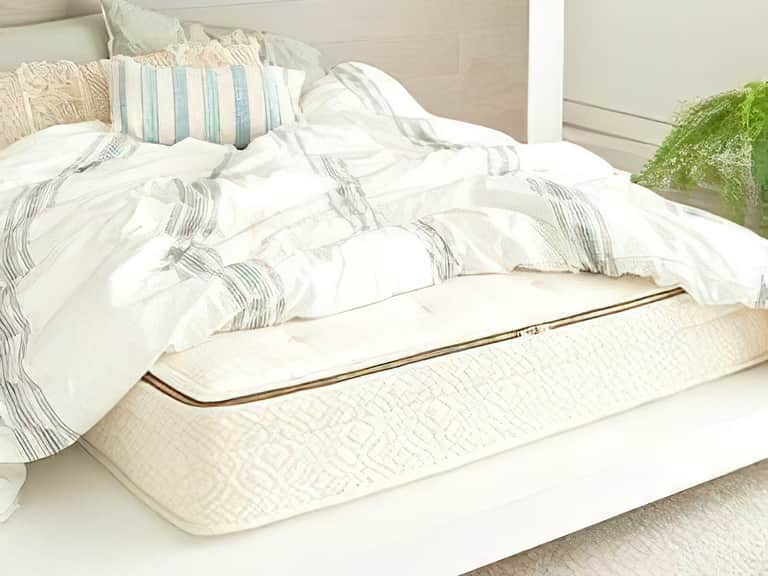
The top portion of a mattress is where many sleepers notice the first impression: a gentle cushion, a buoyant surface, a firmer feel, or a sense of being cradled. Comfort layers are the materials between the cover and the deeper support structure. Depending on the model, those layers may include foam, fibers, quilting, or other components. Their thickness, density, arrangement, and combination all affect how the bed feels.
One layer may soften contact at the shoulders and hips. Another may provide a more responsive surface that adjusts as you move. The cover and quilting contribute too, shaping the first touch and sometimes adding a little surface cushioning. The result is not simply “soft” or “firm.” It is the combined sensation of how quickly the mattress responds, how far you settle in, and how evenly it distributes pressure.
This distinction is worth remembering when you compare beds. A mattress can feel cushioned at the surface while still offering substantial support underneath. Conversely, a bed that seems firm at first may not feel comfortable in the positions you use most. A useful test is to notice what happens after you lie down for several minutes: does the surface still feel pleasant, and does your body feel comfortably supported?
Comfort layers are also not interchangeable across an entire product line. If you are looking at Aireloom mattresses, check the specifications for the exact model and size you are considering. Confirm the listed materials and construction, and ask whether a displayed bed is the same version as the one described on the product sheet. Similar names do not guarantee identical builds.
Support is more than a firmness rating
Firmness describes how a mattress feels when you lie on it. Support is about how well its structure accommodates your body and sleeping position. The two are related, but they are not the same. A softer mattress can provide stable underlying support; a firm one can still feel uncomfortable if it presses too sharply against your shoulders or hips.
Rather than treating a numbered or named firmness scale as a universal measurement, use it as a starting point. Retailers and manufacturers may describe firmness differently, and individual bodies experience the same bed in different ways. Height, weight, preferred position, and personal comfort all affect the sensation. If you share a mattress, each person’s experience may differ even on the same surface.
During a mattress test, pay attention to whether your body feels settled or strained. Your shoulders and hips should feel comfortably accommodated in your usual sleep position, while the rest of your body should not feel as though it is sagging or being pushed into an awkward posture. There is no single showroom test that proves a mattress will work for everyone, but noticing pressure, ease of movement, and overall comfort is more informative than focusing only on a label.
Think about your usual sleep position
- Side sleepers: Notice the feel around the shoulder and hip, which may press more directly into the mattress. A surface that feels too hard to you can become distracting at those contact points.
- Back sleepers: Consider whether the mattress feels balanced across your back and hips, rather than distinctly soft in one area and uncomfortably firm in another.
- Stomach sleepers: Pay attention to how supported your midsection feels. A mattress that allows you to sink more than you like may not feel comfortable in this position.
- Combination sleepers: Test how easily you can change position. A mattress that feels comfortable when still may feel different when you roll or turn.
These are prompts, not rules. Sleep preferences are individual, and people often move between positions during the night. If you are testing a mattress in person, lie down as you would at home and give yourself time to notice its feel. A brief sit on the edge or a quick press with your hand cannot replicate the experience of resting on it.
Aireloom model comparisons: what to ask about
When you compare Aireloom models, focus on verifiable details rather than assuming that a more elaborate description automatically means a better fit. Ask for the current specification sheet for each model. Then compare like with like: the same size where possible, the exact model name, the listed comfort materials, the support construction, and the finished mattress height.
It can help to write down the details while you shop. Product names and construction terminology can blur together after you have tried several beds. A short comparison makes it easier to remember what you liked and what you still need to confirm. If you see unfamiliar terms, ask what they mean in practical terms: how the layer affects the feel, whether it is part of the comfort system or the support structure, and whether it differs between sizes or versions.
- What materials are listed in the comfort layers and cover?
- What kind of support structure does this specific model use?
- How does the model compare with the next firmer or softer option?
- Does the floor sample match the model and configuration being ordered?
- What is the mattress height, and will it work with your frame and sheets?
- What are the trial, exchange, return, and warranty terms?
- Are there care instructions or foundation requirements to follow?
Be particularly careful with broad claims about cooling, pressure relief, durability, or suitability for a particular kind of sleeper. Those descriptions may be useful context, but they do not replace the model’s own specifications or your experience testing it. Ask what features support the claim and whether the details apply to the exact bed you are considering.
The showroom test: make it count
Shopping in a showroom can help you compare the feel of different beds, but it works best when you approach it with a plan. Start with what you already know: your current mattress feels too firm, too soft, too warm, or simply past its best. If you can describe the problem clearly, you will have a more useful conversation than if you only ask for the most popular option.
On each mattress, lie in your usual position for long enough to settle into the surface. Then try another position if you commonly switch during the night. Notice whether you feel supported and comfortable, whether movement feels easy, and whether your partner’s movement is noticeable if you are testing together. Do not rush from bed to bed. A minute or two can reveal an initial sensation, but it may not tell you whether the mattress remains comfortable once your body has settled.
Compare a range of feels rather than testing only one firmness. The point is not to prove that you prefer a particular label; it is to find out how different constructions feel to you. If an Aireloom model seems appealing, ask to compare it with a nearby option that is firmer or softer. The contrast may help you understand whether you prefer the surface cushioning, the deeper support, or the overall balance.
Keep your expectations grounded, too. A showroom mattress may have been used by many visitors, and a new mattress at home can feel different from the sample. Policies vary, so find out before ordering whether there is a home trial or an exchange option, what conditions apply, and whether fees or other restrictions are involved. A clear answer now is better than a surprise later.
Fit is about the bed, the frame, and the room
Mattress fit has two meanings: how the mattress suits your body and how it works in your home. The second deserves special attention in Manhattan. Bedroom dimensions, building access, and bed-frame compatibility can all affect which model and size make practical sense.
Measure the inside of your bed frame, not just the outside. Mattress sizes are generally standardized, but frames, foundations, and existing furniture can create small differences in usable space. Check the mattress dimensions against the frame’s interior and consider how much room you need to walk around the bed, open drawers, or reach a closet. In a compact bedroom, a larger mattress may look appealing on paper but leave little space for everyday movement.
Mattress height matters as well. Add together the mattress, foundation or platform, and frame height to estimate how high the finished bed will sit. A thick comforter, a taller headboard, or a deep frame can change the overall look and feel. Make sure the bed will be easy for you to get in and out of, and check whether your fitted sheets have enough depth for the complete mattress profile.
Before placing an order, map the delivery route from the building entrance to the bedroom. Measure doorways, tight turns, stair landings, elevator interiors, and any narrow hallway sections. Ask the retailer or delivery provider what dimensions they need and whether the mattress is delivered in a form that affects maneuverability. Do not assume that a mattress fitting through the apartment door means it will fit around every turn.
Building policies can be just as important as measurements. Some properties require advance notice, a certificate of insurance, service-elevator reservations, or deliveries during specified hours. Check with your management or superintendent, then confirm the retailer’s delivery arrangements. In a busy city building, a little coordination can prevent a missed delivery window or a mattress waiting in the lobby.
The bed frame is part of the support system
A mattress does not work alone. The foundation, platform, or frame beneath it needs to be compatible with the model’s requirements. Before buying, ask what type of base is recommended, whether slat spacing matters, and whether an existing foundation can be reused. Confirm the guidance for the exact Aireloom model; requirements should not be assumed to be identical across every mattress.
Inspect an existing frame for loose joints, broken slats, or visible sagging. A mattress on an unstable or unsuitable base may not feel the way you expect, and the setup could conflict with warranty terms. If you are moving into a new apartment, confirm what is included with the bed and what must be purchased separately. These practical details can affect both cost and delivery planning.
Also consider whether a headboard, bed skirt, or under-bed storage will work with the finished height. A mattress that feels right in the showroom may create a different everyday setup when combined with a tall foundation or a low platform. Measuring in advance helps you picture the whole bed, not just the product in isolation.
What materials can—and cannot—tell you
Material descriptions are useful, but they are only part of the story. Two mattresses may include materials from the same broad category and still feel different because their layers, thicknesses, placement, and overall construction differ. Likewise, a long list of materials does not automatically reveal whether you will like the finished mattress.
When reviewing materials, look for specific descriptions and ask how they relate to feel and care. Is a material in the cover, quilting, comfort layer, or support system? Does the specification identify the composition clearly? Are there care instructions, cleaning recommendations, or conditions that could affect the mattress warranty? A concise, direct answer is more useful than a string of technical terms without context.
If temperature is a concern, ask about the complete surface construction and how the retailer describes the model’s feel. Avoid relying on a single label or a feature name as a guarantee that you will sleep at a particular temperature. Bedding, room conditions, and personal preference all influence the experience. A breathable mattress cover or a particular layer may be relevant, but it cannot account for every factor in your sleep environment.
Price, warranty, and the fine print
Luxury positioning can make a mattress feel like a major commitment, so compare the terms as carefully as the construction. Ask for the full price for your chosen size and configuration, including any delivery or setup charges that apply. If a promotion is advertised, confirm its dates and conditions. Costs can vary by model, size, and retailer, so avoid making decisions based on an unverified starting price.
Read the warranty before buying. A warranty generally covers defined manufacturing or material defects under stated conditions; it is not automatically a comfort guarantee or a promise that the mattress will feel unchanged indefinitely. Review what the document says about the foundation, visible sagging, stains, handling, and any other requirements. Keep your receipt and product information in a safe place.
Exchange and return policies deserve their own careful look. Ask how long you have to decide, whether the mattress must be used for a minimum period, what condition it must be in, and whether fees apply. Confirm whether the policy covers the exact model and size you are ordering. Clear terms can make the decision more comfortable, especially when you cannot know exactly how a mattress will feel until you sleep on it at home.
A practical checklist before you decide
Before committing to an Aireloom mattress—or any mattress—pause for a final check. A few minutes spent confirming the essentials can help prevent an expensive mismatch between a model’s feel, your frame, and your apartment.
- Model: Record the exact name and version, then match it to the product specifications.
- Feel: Test the mattress in your usual sleep position and compare it with a firmer or softer alternative.
- Construction: Confirm the listed comfort layers and support system for the model you will receive.
- Dimensions: Measure the frame, bedroom, doorways, stairs, turns, and elevator as relevant.
- Foundation: Check compatibility requirements and inspect the base you plan to use.
- Delivery: Confirm timing, building rules, access needs, and any setup services.
- Terms: Read the trial, exchange, return, warranty, and care information before ordering.
- Partner needs: If you share the bed, test it together and discuss differences in preferred feel.
The bottom line on Aireloom mattresses
Aireloom mattresses can attract attention with their layered comfort and luxury-minded presentation, but the name alone cannot determine whether a particular model is right for you. The meaningful comparison is between specific beds: their documented construction, the way their comfort layers feel, the support you notice in your normal sleep positions, and the practical details of their size and setup.
Take your time in the showroom, ask direct questions, and verify the exact specifications and policies before ordering. At home, measure the frame and delivery route, especially if your building has narrow access or scheduled delivery rules. The best choice is not necessarily the plushest or the most expensive model. It is the mattress that feels comfortable to you, fits your support preferences, works with your bed base, and can make the journey into your room without an urban obstacle course.
A thoughtful comparison can turn a confusing set of labels and layers into a clear decision. Start with how you sleep, use the product details to narrow the field, and let comfort and fit—not marketing shorthand—guide the final choice.